
KEY HIGHLIGHTS
- Hyundai revealed the all-new Crater Concept adventure SUV at AutoMobility LA 2025.
- The compact off-road concept blends rugged XRT DNA with bold Art of Steel design.
- Crater previews Hyundai’s future direction for lifestyle-focused electric off-roaders.
Unveiled globally at AutoMobility LA 2025, the Crater Concept is described as a compact off-road SUV inspired by Hyundai’s growing XRT adventure lineup, including the Ioniq 5 XRT and Palisade XRT Pro.
It’s a clear signal: Hyundai wants a bigger slice of the lifestyle off-road market.
| Feature | Hyundai Crater Concept |
|---|---|
| Vehicle Type | Compact off-road SUV concept |
| Design Theme | Art of Steel exterior language |
| Wheels & Tyres | 18-inch wheels with 33-inch off-road tyres |
| Key Focus | Adventure, durability, modular utility |
| Public Debut | AutoMobility LA 2025 |
Art of Steel Exterior with Purpose
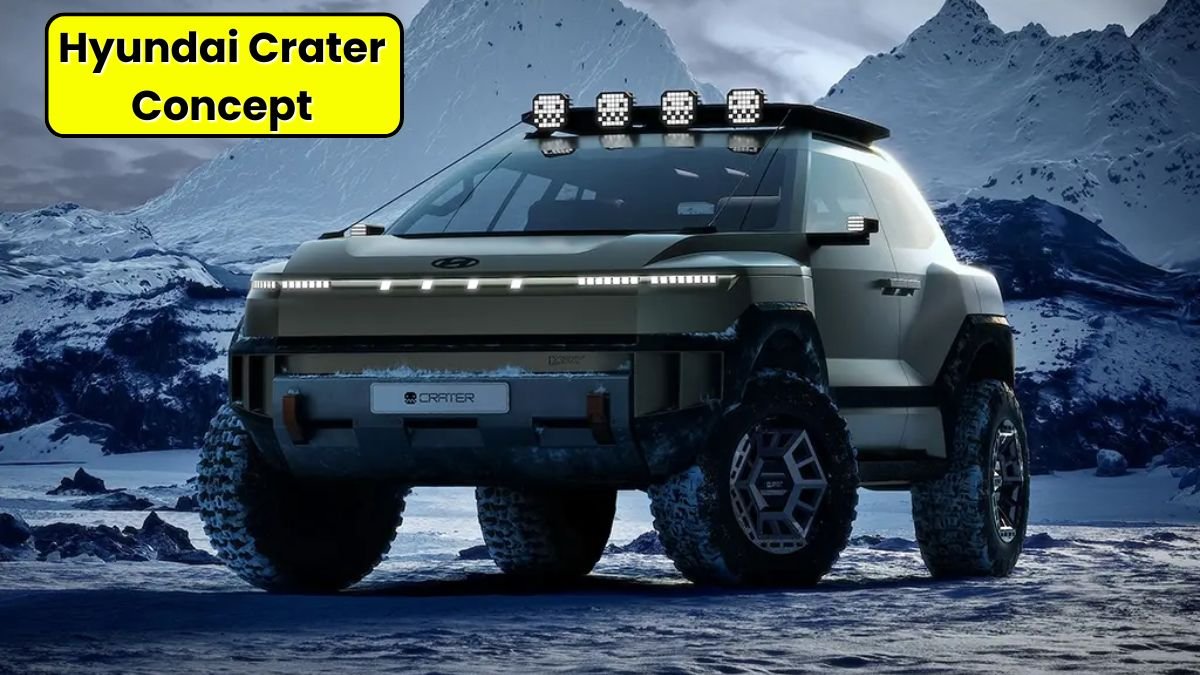
The Crater Concept introduces Hyundai’s Art of Steel design language, turning raw strength into sculptural form.
The green-gold matt exterior is bold without being flashy, shaped by flowing surfaces and sharp edges that emphasise toughness.
Its 18-inch wheels are paired with 33-inch off-road tyres, offering serious ground clearance and grip for harsh terrain.
Built for Real-World Off-Roading
This concept goes beyond styling.
A full-width skid plate protects the underbody, while limb risers stretch from the hood to the roof, shielding the vehicle from branches on narrow trails.
The roof platform is designed for auxiliary lighting and gear storage, reinforcing its overland-ready mindset.
One clever touch stands out: a recovery hook that doubles as a bottle opener — equal parts utility and personality.
Smart Tech with Survival Thinking
Hyundai added features that make sense when things go wrong.

The side-mirror cameras can be removed in emergencies and even function as portable flashlights.
Lighting is also distinctive, with a three-dimensional signature that creates depth through layered illumination rather than flat LEDs.
An Interior Designed for Rough Use
Inside, the Crater Concept continues its industrial theme.
The dashboard’s high-brow crash pad, shaped like a bent metal sheet, visually connects the exterior and cabin.
A multi-function head-up display integrates a rearview camera feed, reducing the need for a traditional mirror.
A visible roll cage structure outlines the cabin, while integrated grab handles make climbing in and out easier on uneven ground.
Seats Built for Stability, Not Style
The seating design breaks away from standard bucket seats.
Wraparound forms with three-dimensional padding provide stability during aggressive off-road driving.
Cylindrical cushions, deep side bolsters, and a four-point seatbelt system point toward enhanced restraint and safety when tackling rough terrain.
Comfort isn’t forgotten — it’s just built differently.

Colour Choices with a Story
The green-gold matt paint draws inspiration from California’s coastal landscapes.
Outside, anodised orange accents highlight functional touchpoints.
Inside, the same orange tones reference desert sunsets and campfires, contrasting with a black leather base that keeps the cabin grounded and practical.
What the Crater Concept Really Signals
Hyundai hasn’t confirmed production plans.
But the Crater Concept strongly hints at a future compact electric off-road SUV positioned for adventure-focused buyers who want capability without going full-size.
If this design language reaches production, Hyundai could quickly become a serious contender in the lifestyle off-road space.
Frequently Asked Questions
Is the Hyundai Crater Concept an electric vehicle?
Hyundai hasn’t confirmed powertrain details, but its design and XRT influence suggest a strong likelihood of an electric setup.
Will the Crater Concept go into production?
There’s no official confirmation yet. However, many features align closely with production-ready components.
How is Crater different from Hyundai’s current XRT models?
Crater pushes further into off-road-focused design, with more extreme tyres, recovery gear, and modular utility features.

 Join
Join