
KEY HIGHLIGHTS
- Singapore home loan rates are at their lowest levels since 2022.
- Further rate cuts in 2026 are possible, but likely to be small.
- Many homeowners are refinancing or switching from HDB to bank loans to save thousands.
Mortgage rates in Singapore have quietly slid to three-year lows, and homeowners are finally feeling some breathing space.
Fixed-rate housing loans today are about half of what borrowers paid in January. The big question now: Will rates keep falling in 2026, or is this as good as it gets?
Why Singapore mortgage rates dropped so sharply
Singapore banks don’t move in isolation. Local home loan rates closely track signals from the US Federal Reserve.
In December, the Fed delivered its third interest rate cut of the year, reinforcing market expectations that borrowing costs would ease further.
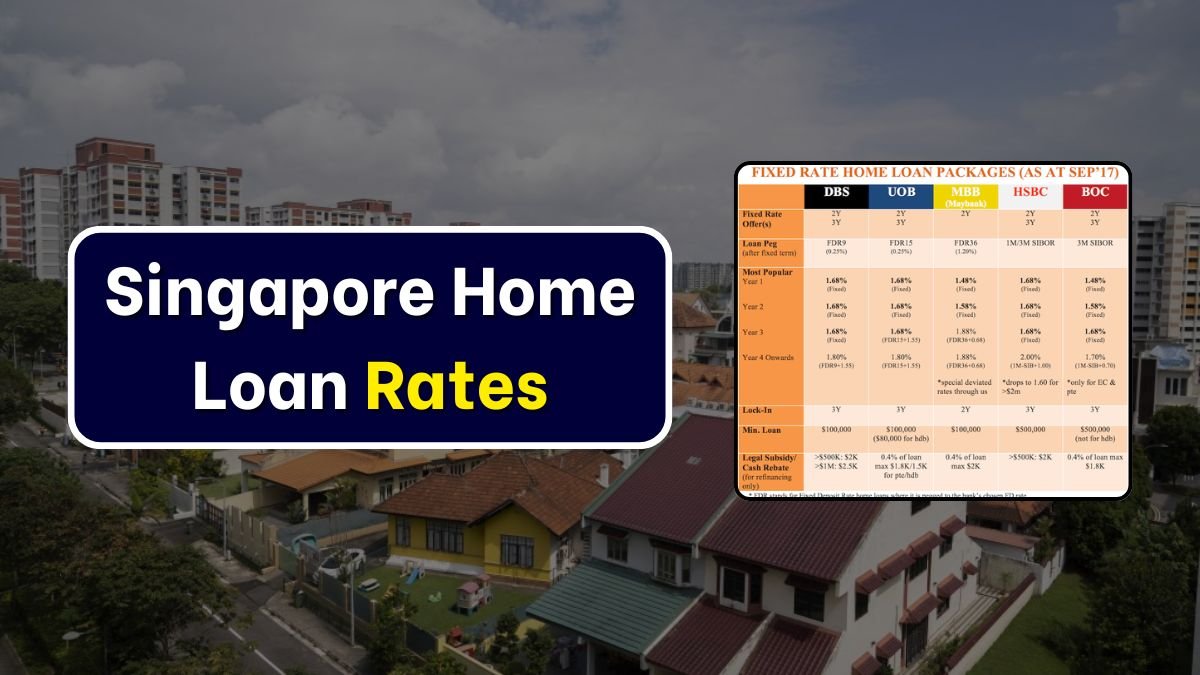
At the start of 2025, fixed-rate home loans were around 3.1%. Today, banks are offering fixed packages between 1.4% and 1.8%, depending on loan size and tenure.
Singapore home loan rates are at 3-year lows
| Loan Type | Early 2025 | Dec 2025 | What It Means |
|---|---|---|---|
| Fixed-rate loans | ~3.1% | 1.4% – 1.8% | Nearly half the cost |
| 3M SORA | ~3.0% | 1.2% | Lowest since Aug 2022 |
| Bank loan spread | ~0.7% | ~0.25% | Banks competing harder |
| HDB concessionary loan | 2.6% | 2.6% (unchanged) | Now higher than bank rates |
Floating rates have fallen too — fast
It’s not just fixed loans.
Floating-rate packages, typically pegged to the three-month SORA, have also eased sharply. SORA dropped from around 3% in January to 1.2% by mid-December.
That’s the lowest level seen since August 2022.
Banks have also trimmed their margins. The usual spread added on top of SORA has narrowed from about 0.7% to as low as 0.25%.
Honestly speaking, this level of competition doesn’t happen often.
Will rates keep falling in 2026?
Short answer: Yes, but don’t expect fireworks.
DBS analysts say local rates likely started falling even before the Fed cuts, helped by strong domestic liquidity and safe-haven flows earlier this year.
Looking ahead, the Fed’s latest projections point to only one small cut (0.25%) in 2026. Fed chair Jerome Powell has also made it clear that aggressive easing is off the table for now.

Most mortgage experts believe SORA has already found a floor, unless there’s a major global shock like a severe recession or labour market collapse.
So if you’re hoping for sub-1% home loans — don’t overthink it. Very unlikely.
Banks still fighting hard for your business
Even if headline rates stabilise, banks aren’t backing off.
Expect to see:
- Legal fee subsidies
- Cash rebates
- Zero-penalty early repayment offers
Competition is usually fiercest in Q1, when banks push hard for market share.
For homeowners coming out of lock-in periods, this is where savings can really stack up.
Refinancing vs repricing: real savings happening now
More Singaporeans are switching packages to cut monthly costs.
One homeowner who repriced recently moved to a two-year fixed loan at 1.6%, down from 3% previously — saving about S$500 every month.
That’s S$6,000 a year, just by changing loan terms.
Quick reminder:
- Refinancing: switch banks (legal & valuation fees apply)
- Repricing: change package with the same bank (lower admin fees)
Both can make sense, depending on your situation.
Why HDB owners are switching to bank loans
This is the big shift in 2025.
The HDB concessionary loan rate stays at 2.6%, while bank mortgage rates are now well below that.

As a result:
- OCBC saw 7x more HDB owners switching to bank loans this year
- DBS reported a 13x jump in take-up for its POSB HDB loan packages
- A S$500,000 loan could save up to S$4,100 a year in interest
Sounds attractive — but there’s a catch.
Once you move from an HDB loan to a bank loan, you can’t go back. And bank loans come with more rate volatility.
Worth it or not? Depends on your risk comfort.
Should homeowners act now or wait?
For most Singaporeans, today’s rates already price in most of the expected easing.
If your lock-in period is ending soon, waiting for another big drop may not pay off. The bigger wins right now come from:
- Locking in low fixed rates
- Negotiating rebates
- Choosing flexibility if future rates rise again
There will be another tightening cycle someday. That’s just how interest rates work.
Frequently Asked Questions
1. Will Singapore home loan rates drop below 1% in 2026?
Very unlikely. Most analysts believe current rates already reflect expected Fed cuts unless there’s a major economic shock.
2. Is it better to take fixed or floating rates now?
For risk-averse borrowers, fixed rates around 1.5%–1.8% offer peace of mind. Floating rates may be slightly cheaper but can move up later.
3. Should HDB owners switch to bank loans now?
If you’re comfortable with rate fluctuations and plan long-term, the savings can be significant. Just remember — you can’t switch back to an HDB loan.
Article Source: CNN

 Join
Join