
KEY HIGHLIGHTS
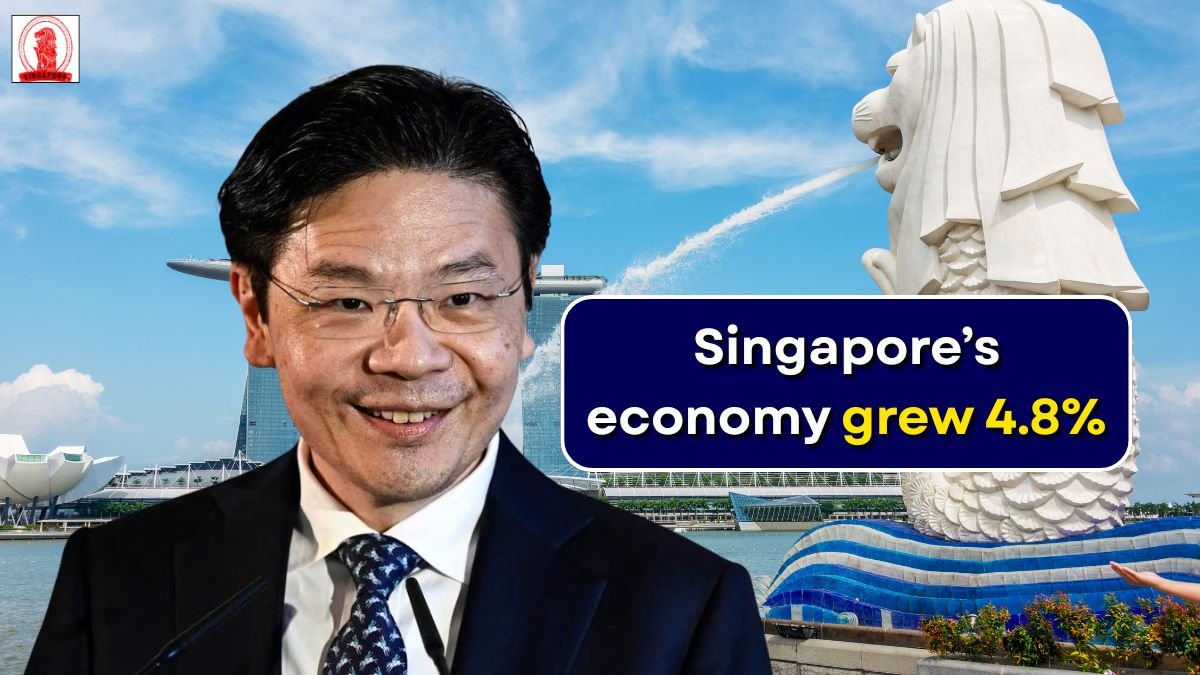
- Singapore’s economy expanded by 4.8% in 2025, beating earlier expectations
- Growth was driven by AI-related demand, resilient global trade, and delayed US tariffs
- Government signals major policy refresh, with key changes expected at Budget 2026
Singapore ended 2025 on a stronger note than most expected, with the economy growing by 4.8%. That’s a solid result, especially given the global uncertainty many countries are still grappling with.
But Prime Minister Lawrence Wong was clear in his New Year message on 31 December 2025: this pace of growth will be hard to sustain. The global environment has changed, and Singapore cannot afford to rely on the same old playbook.
To stay competitive, the country must rethink, reset and refresh its economic strategies — and some of those changes are coming sooner than many realise.
Why Singapore’s growth beat expectations in 2025
The stronger-than-expected performance did not happen by accident. According to PM Wong, several global and domestic factors aligned in Singapore’s favour.
First, the surge in artificial intelligence (AI) adoption worldwide drove strong demand for semiconductors and electronics, sectors where Singapore remains deeply integrated. Second, global economic growth turned out to be more resilient than predicted, despite fears of sharp slowdowns.
There was also relief on the trade front. US tariffs were introduced later than expected, and at lower levels than many businesses had feared. Together, these factors helped keep unemployment and inflation low, while real incomes rose across the board.
| Key Factor | What Happened in 2025 | Why It Mattered for Singapore |
|---|---|---|
| Economic Growth | 4.8% GDP expansion | Provided fiscal room and stronger job market |
| AI & Tech Demand | Strong semiconductor and electronics demand | Boosted manufacturing and exports |
| Global Economy | More resilient than expected | Supported trade and investments |
| US Tariffs | Introduced later, at lower levels | Reduced cost pressures on businesses |
| Inflation & Jobs | Inflation stayed low, incomes rose | Helped ease cost-of-living concerns |
A refreshed economic strategy is coming
PM Wong stressed that doing more of the same will not be enough. The world is now more fragmented, with trade routes being reconfigured and supply chains reshaped in the name of resilience and security.
Geopolitical tensions — from the war in Ukraine, instability in Gaza, to regional border disputes — are no longer short-term disruptions. They are permanent features of the global economy.
This is why the Economic Strategy Review, led by Deputy Prime Minister Gan Kim Yong and overseen by a younger leadership team, is a big deal. The first set of proposals will be released soon, with the Government expected to respond formally at Budget 2026, which PM Wong will deliver on 12 February 2026.
What Budget 2026 is likely to focus on
For most Singaporeans, the big questions are close to home: job security, cost of living, and long-term stability.
PM Wong acknowledged that inflationary pressures could return and that Singapore, as a small and open economy, cannot fully shield itself from global shocks. Still, he emphasised that Singapore is entering this phase from a position of strength.

The country’s international standing remains high, and its reputation continues to attract global companies — from major tech firms like Microsoft to fast-growing start-ups — looking for a stable base in Asia.
Singapore’s brand still opens doors overseas
During overseas visits, PM Wong observed how Singapore’s reputation continues to create opportunities for local businesses. Singapore firms are expanding beyond traditional markets, carving out new niches in Africa and Latin America.
The Government, he said, will continue supporting local companies as they scale up and venture overseas, especially as competition intensifies globally.
At the same time, the focus remains firmly on improving lives here at home.
Growth is a means, not the end goal
PM Wong made it clear that economic success only matters if it benefits Singaporeans.
The Government will continue working with unions and employers to help every worker upgrade, progress, and see real gains for themselves and their families. Beyond jobs, efforts will continue to strengthen the basics — education, housing, and healthcare — so Singaporeans have security and peace of mind.
Special attention will remain on lower-income families, persons with disabilities, and caregivers, ensuring support is both practical and meaningful.
Long-term challenges Singapore cannot ignore
Looking ahead, Singapore faces structural issues that require difficult but necessary decisions.
An ageing population and declining birth rates mean policies must better support young families, from housing access to childcare and education costs. At the same time, seniors who want to continue working should be able to do so in age-friendly workplaces.
A Tripartite Workgroup on Senior Employment is currently reviewing how to make this happen, alongside efforts to strengthen retirement adequacy, especially for lower- and middle-income workers.
Clean energy is the next major test
One of the biggest long-term challenges highlighted was clean energy.

Singapore needs reliable, low-carbon energy sources to power future industries — especially energy-hungry sectors like AI. Strategies include importing green energy through the ASEAN power grid, while also exploring domestic options such as low-carbon hydrogen and nuclear energy.
There are no easy answers here, but standing still is not an option.
Staying united in a more uncertain world
Both PM Wong and Senior Minister Lee Hsien Loong struck a similar tone: the world feels more dangerous and uncertain, but Singapore has faced tough odds before — and pulled through.
From newly declassified historical documents showing how close Singapore once came to failure, to recent sporting achievements like qualifying for the Asian Cup, the message is consistent. Progress comes from staying focused, united, and willing to adapt.
The road ahead will not be smooth. But with honest conversations, bold ideas, and a shared sense of purpose, Singapore can continue moving forward — together.
Frequently Asked Questions
1. Is the 4.8% growth rate expected to continue in 2026?
Unlikely at the same pace. PM Wong has cautioned that sustaining 4.8% growth will be challenging due to global uncertainty and structural shifts in trade and geopolitics.
2. What should Singaporeans watch out for in Budget 2026?
Key areas include job security, cost-of-living measures, business support, and responses to recommendations from the Economic Strategy Review.
3. How does global geopolitics affect Singapore’s economy?
As a small, open economy, Singapore is sensitive to trade disruptions, supply chain shifts, and geopolitical tensions, which can affect jobs, prices, and long-term growth.

 Join
Join