
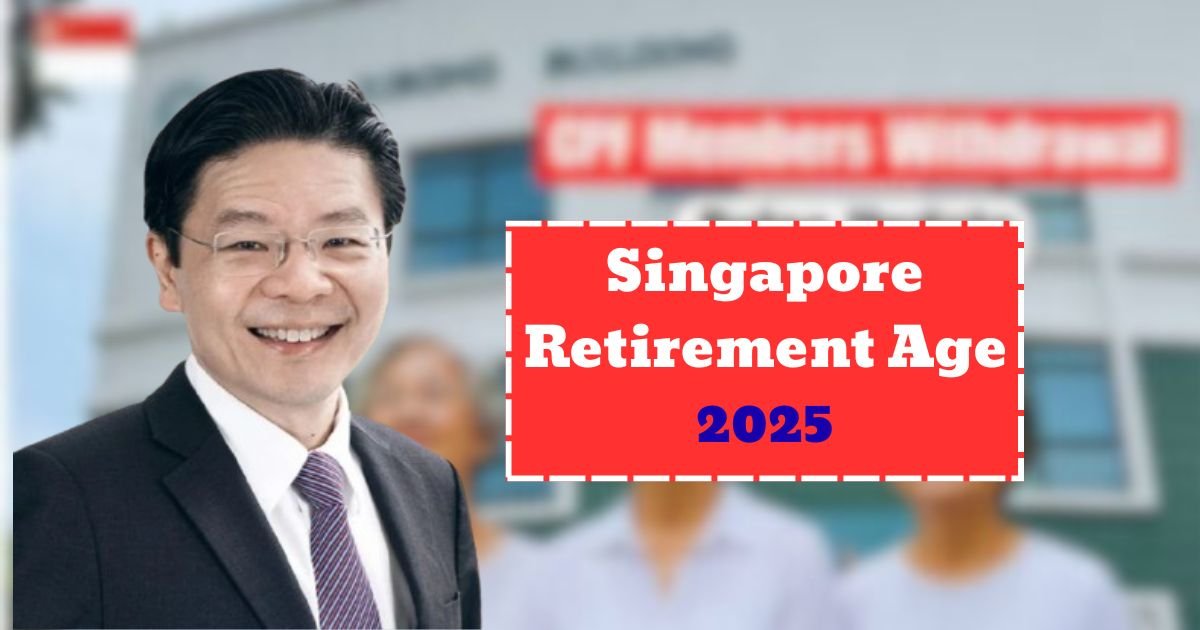
Think of it this way: you’re in your sixties, full of life and knowledge but still yearning for new adventures or maybe even carrying on with the job you love. In Singapore, a country where the average life expectancy has now gone beyond 83 years, the term retirement is not synonymous with withdrawal; it means deciding to live longer in a certain way. December 2025 is the date by which the government will have put in place policies that indicate this transformation, enabling the elderly workforce to be active continuously and at the same time having their security assured.
Existing Retirement Age in 2025
The retirement age defined by law in Singapore is 63 years. It is not permissible for employers to get rid of workers solely based on age prior to this age mark. This practice not only shields the older workers but also supports companies in getting more seasoned workers’ input.
The Ministry of Manpower (MOM) is strict in its enforcement of these rules. The majority of older employees choose to stay in their jobs for a longer time, mixing their financial security with the purpose of living in a very fast and demanding economy.
Changes Coming Soon
Upcoming changes will be good news in 2026. The first day of July will see the retirement age going up to 64 and the re-employment age moving from 68 to 69.
This gradual approach is in line with the long-term vision of a 65-year-old retirement age and a 70-year-old re-employment age by 2030. The public sector will be at the forefront of this change, implementing it from July 2025.

These reforms not only consider the ageing of the population in Singapore but also the labor requirements. If people are to live longer and healthier lives, it will not only be desirable but also the right thing to do for them to have the option of working longer.
Re-Employment: Options After Retirement
Re-employment is like a bridge for those who want to remain in the workforce. Workers who fulfill the requirements—medically fit and with good performance—are given job offers up to the re-employment age.
The conditions may change, for instance, fewer hours or different jobs, but the main goal is still to benefit each other. Employers who do not have any openings must give a helping hand that is reasonable, such as assistance with job placement.
Main Distinctions: Retirement vs CPF Payouts
The supposed connection that the retirement age has to do directly with the Central Provident Fund (CPF) payments is widespread. However, in fact, they work separately.
CPF payment authorization is still set at 65, which means that monthly income through CPF LIFE is available for life-long security. On the other hand, withdrawals are done from the age of 55 and funds above the retirement sum must be kept aside prior to the withdrawal.

This difference allows for the worker to choose—extended work life if he/she wishes to, but funds can still be accessed freely.
Age Changes: A Brief History
The following table gives a clear indication of the retirement and re-employment ages in Singapore:
| Period | Retirement Age | Re-Employment Age |
|---|---|---|
| Current (2025) | 63 | 68 |
| From July 2026 | 64 | 69 |
| Target by 2030 | 65 | 70 |
Advantages for Employees and Employers
Through the extension of CPF contributions, these policies ensure the adequacy of retirement savings. The elderly get the chance of living a purposeful life, using their skills, and receiving a salary.
Companies are able to keep the expertise that is crucial for them and the government will continue to support their costs through schemes like Senior Employment Credits. This way, a vibrant and inclusive workforce is created, where age is seen as a quality rather than a disqualification.

 Join
Join